
Beef Nutrition and Health Resources
Download and view checkoff-funded beef nutrition and health educational resources that make every beef bite count.
Beef in a Heart-Healthy Diet
Heart health research shows eating beef can solve one of America’s greatest health challenges. Discover how lean beef can be part of a heart-healthy lifestyle.
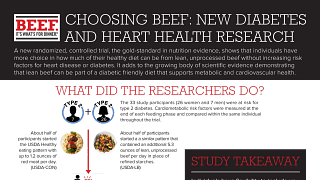
Choosing beef: Diabetes and heart health research
A new randomized, controlled trial, the gold-standard in nutrition evidence, shows that individuals have more choice in how much of their healthy diet can be from lean, unprocessed beef without increasing risk factors for heart disease or diabetes. It adds to the growing body of scientific evidence demonstrating that lean beef can be part of a diabetic friendly diet that supports metabolic and cardiovascular health.
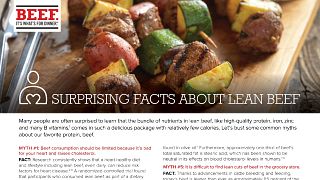
Surprising facts about lean beef
Many people are often surprised to learn that the bundle of nutrients in lean beef, like high-quality protein, iron, zinc and many B vitamins, comes in such a delicious package with relatively few calories. Let’s bust some common myths about our favorite protein, beef.
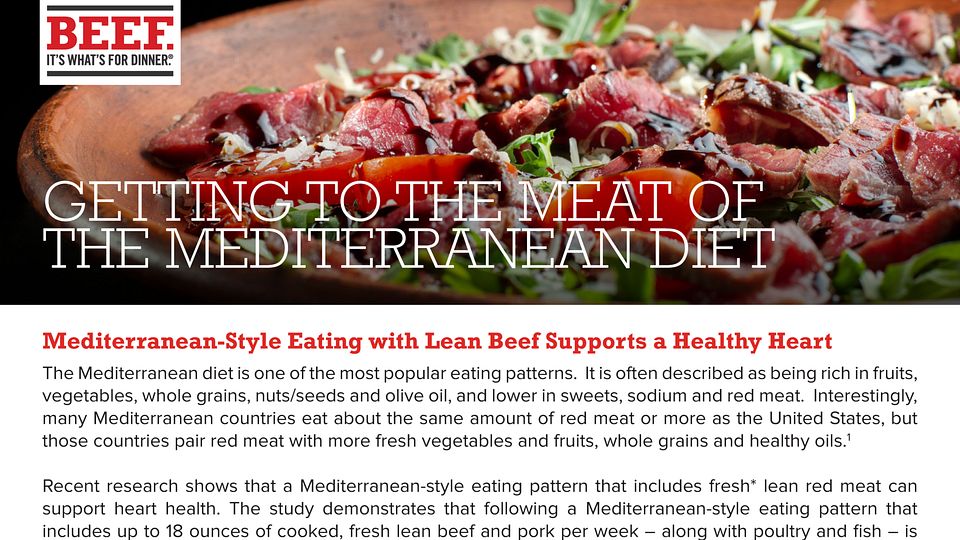
Getting to the meat of the Mediterranean diet
The Mediterranean diet is one of the most popular eating patterns. It is often described as being rich in fruits, vegetables, whole grains, nuts/seeds and olive oil, and lower in sweets, sodium and red meat. Interestingly, many Mediterranean countries eat about the same amount of red meat or more as the United States, but those countries pair red meat with more fresh vegetables and fruits, whole grains and healthy oils.
Beef for the Early Years
Every bite your baby takes counts, especially in the first 1,000 days of life. Starting your baby with beef as a complementary first food can ensure they get the nutrients they need for healthy growth and development.
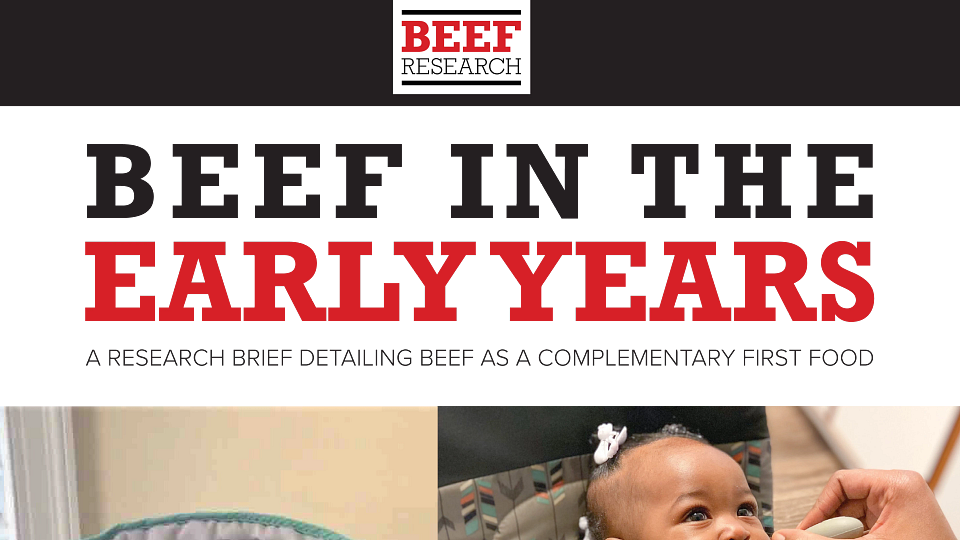
Beef in the early years
A research brief detailing beef as a complimentary first food. Authoritative guidance from the American Academy of Pediatrics (AAP), the World Health Organization (WHO), and the U.S. Department of Agriculture (USDA), recommends the introduction of nutrient- dense complementary foods at approximately 6 months of age, based on the infant’s developmental stage and nutritional status.
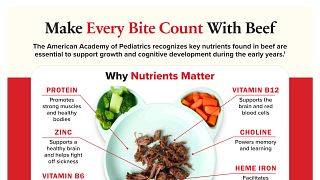
Make every bite count with beef
The American Academy of Pediatrics recognizes key nutrients found in beef are essential to support growth and cognitive development during the early years.
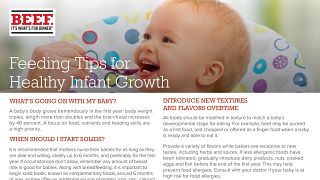
Feeding tips for healthy infant growth
A baby’s body grows tremendously in the first year: body weight triples, length more than doubles and the brain/head increases by 40 percent. A focus on food, nutrients and feeding skills are a high priority.

Eating tips for healthy toddler growth
During this stage it's important to expose toddlers to a variety of nutritious foods so they learn to eat a balanced diet. It's also important to meet nutrient requirements and transition to an eating routine.
Beef for the Teen Years

Beef's importance for tweens and teens
Nutrition is important throughout life, and it’s essential to build a strong foundation of diet variety, nutrient density, and healthy habits during childhood and adolescence.
Build a Better Plate with Beef
Recipes that tastefully combine a variety of food groups to achieve the perfect balance of taste, nutrition and simplicity with your favorite beef cuts.

Dinner and dessert for under 500 calories
Trying to meet those calorie goals without, you know, feeling hungry all the time or turning to snacks that taste like cardboard? Here’s a meal that tastes amazing, fills you up and even satisfies your sweet tooth along the way. The protein in lean beef helps keep you full longer, and this balanced meal is fiber-rich due to vegetables like spaghetti squash and spinach.

Beef adds nutrients and flavor to salads
These salads above are the same with one exception: the protein source. The salad on the left has 10 walnuts, while the salad on the right includes half the number of walnuts in addition to 3 ounces of Top Sirloin. Did you notice that the calories on the two salads are similar? That’s because 3 ounces of cooked, lean beef provides 25 grams of protein for around 173 calories.

Burrito bowls
People who eat a higher-protein diet (about 30% of daily calories from protein) feel more satisfied, which may help prevent overeating. The great news is that a 3-oz serving of cooked beef provides 25 grams of protein and other essential nutrients in one tasty package for about 170 calories. To get the same amount of protein from pinto beans in this burrito bowl, you’d need to add 1⅔ cups, which would be over 400 calories.
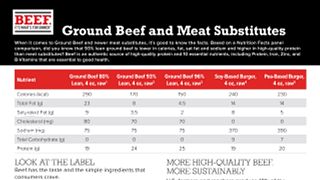
Ground beef and meat substitutes
When it comes to Ground Beef and newer meat substitutes, it’s good to know the facts. Based on the Nutrition Facts panel comparisons, did you know that 93% lean ground beef is lower in calories, fat, sat fat and sodium and higher in high-quality protein than meat substitutes? Beef is an authentic source of high-quality protein and 10 essential nutrients, including Protein, Iron, Zinc, and B-Vitamins that are essential to good health.
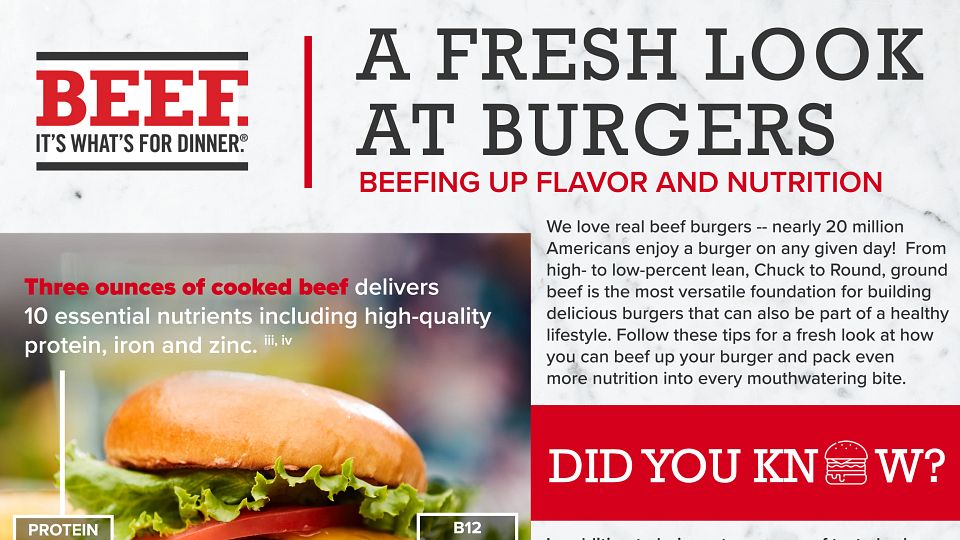
A fresh look at burgers
We love real beef burgers -- nearly 20 million Americans enjoy a burger on any given day! From high-to low-percent lean, Chuck to Round, ground beef is the most versatile foundation for building delicious burgers that can also be part of a healthy lifestyle. Follow these tips for a fresh look at how you can beef up your burger and pack even more nutrition into every mouthwatering bite.

Stock your protein pantry
Here’s a helpful guide to stock up on protein staples so you can easily enjoy flavorful, protein-rich meals any time of the day.
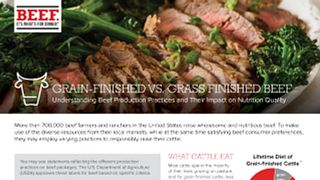
Grain-finished and grass-finished beef
More than 700,000 beef farmers and ranchers in the United States raise wholesome and nutritious beef. To make use of the diverse resources from their local markets, while at the same time satisfying beef consumer preferences, they may employ varying practices to responsibly raise their cattle.
Beef's Protein and other Nutrients
If there was a protein contest, beef would surely be crowned the king! Among the powerful package of 10 essential nutrients beef is known for, protein may be one of the most notable. In fact, one 3 oz cooked serving of beef provides 50% of your Daily Value (25 grams) of this important nutrient—making it an excellent source!
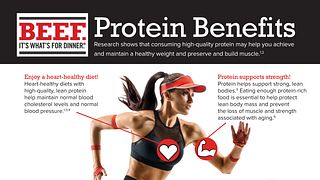
Protein benefits
Research shows that consuming high-quality protein may help you achieve and maintain a healthy weight and preserve and build muscle.
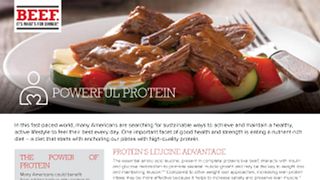
Powerful protein
In this fast-paced world, many Americans are searching for sustainable ways to achieve and maintain a healthy, active lifestyle to feel their best every day. One important facet of good health and strength is eating a nutrient-rich diet – a diet that starts with anchoring our plates with high-quality protein.

Raise the steaks on nutrition and taste
We all know beef tastes great – but did you know that beef is also an important part of a healthy diet? Check out these facts about how beef can support your health.
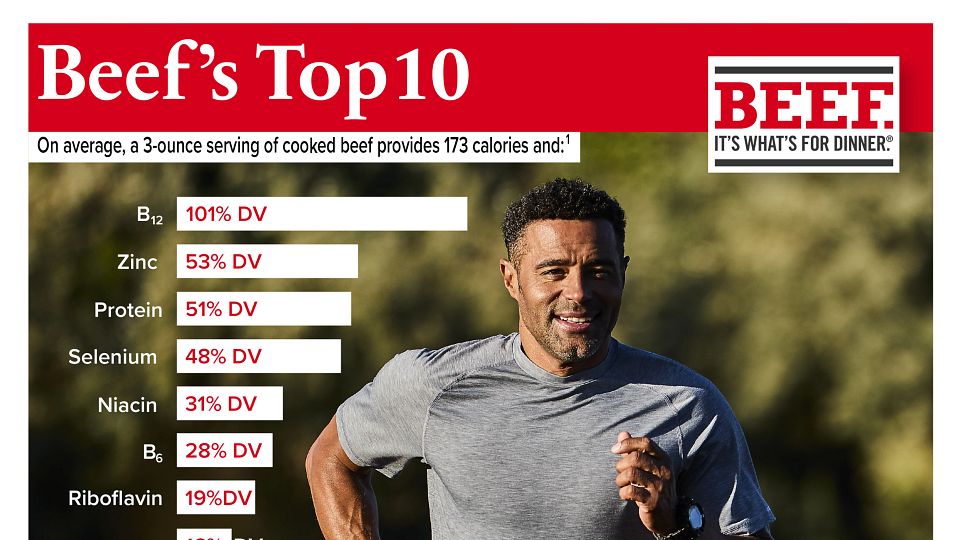
Beef's top 10
Beef has the taste you crave while providing an excellent source of high-quality protein and containing 9 other essential nutrients.
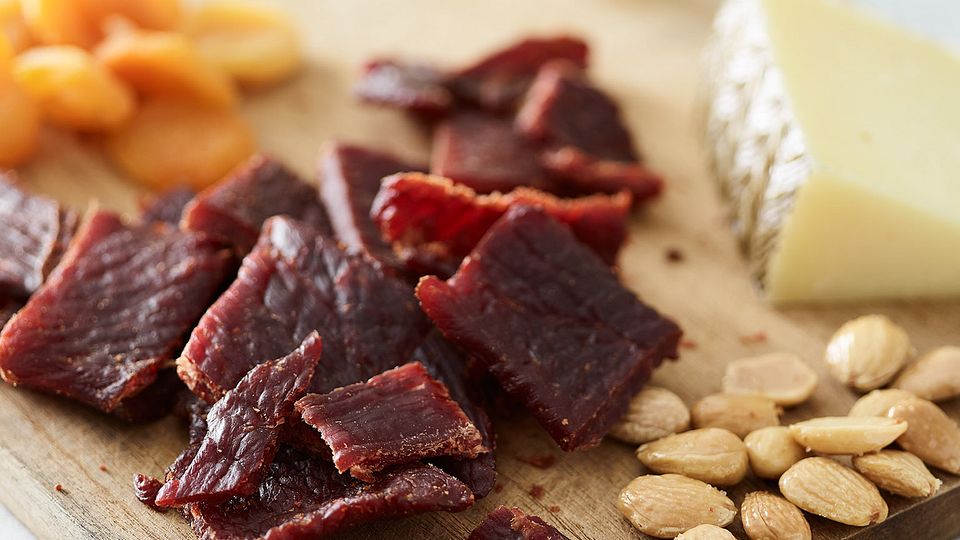
Simply Snackin' beef snacks 2013 research study
"More than 25 percent of athletes are deficient in iron — endurance athletes are at highest risk. Yet these athletes shy away from consuming red meat, one of the best absorbable sources of iron, according to professor Kendra Kattelmann of the health and nutritional sciences department."

Build Your Base with Beef
Evidence-based nutrition strategies that are designed for athletes at every level.